Artificial intelligence can do everything! And its applications seem infinite.
Assistants like ChatGPT can answer complex questions, write texts, or even solve mathematical problems. But did you know that it is also possible to use AI to estimate your intelligence quotient (IQ)?
Whether you are curious about your cognitive abilities or want to take on an intellectual challenge, AI offers fascinating solutions.
However, for an optimized, fast, and reliable experience, Yiaho offers a free online IQ test, specifically designed to evaluate your intelligence in a fun and accessible way.
In this article written by the Yiaho team, we will explore how ChatGPT can be used for an approximate estimation of your IQ and how Yiaho’s specialized test stands out as a unique and high-performance alternative.
Eager to discover the result? Here is our free online IQ test!
ChatGPT: a versatile tool, but limited for measuring IQ?
ChatGPT is an impressive AI, capable of conversing on almost any subject. You can ask it to give you riddles, logic questions, math problems, or verbal reasoning exercises to test your cognitive skills.
For example, you could say: “Give me a difficult logic riddle” or “Give me an advanced math problem.” ChatGPT will respond with suitable challenges, and based on your answers, you could try to evaluate your performance.
However, using ChatGPT to estimate your IQ has several limitations:
- Lack of standardized methodology: Professional IQ tests, such as the WAIS (Wechsler Adult Intelligence Scale) or Raven’s Matrices, follow rigorous protocols with calibrated questions and normalized scores. ChatGPT, on the other hand, generates questions randomly or contextually, without guaranteeing a consistent evaluation comparable to a standard.
- Lack of specialization: ChatGPT is designed to be a general assistant, not a psychometric tool. Its answers, while relevant, are not optimized to measure specific areas of intelligence, such as spatial reasoning or working memory.
- Subjectivity in evaluation: Without a clear scoring system, it is difficult to turn your answers to ChatGPT into a reliable IQ score. You might feel smart solving a riddle, but that doesn’t necessarily reflect your overall IQ.
- Time and effort: Creating an improvised IQ test with ChatGPT requires manually designing a series of varied questions, which can be time-consuming and unstructured.
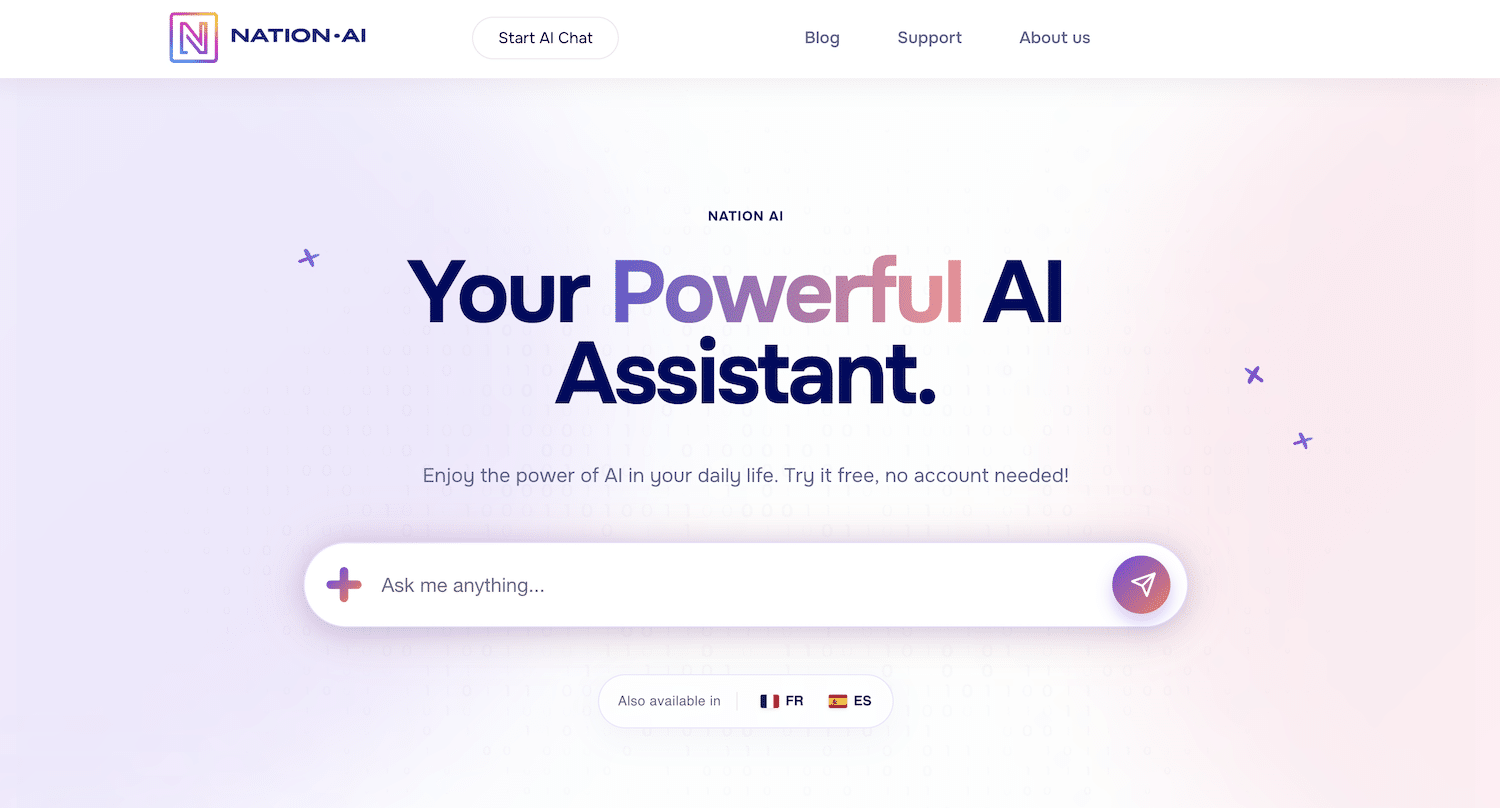
That’s where Yiaho comes in. We offer a specialized AI, designed exclusively to estimate your IQ in a fast, accurate, and engaging way. Let’s see how it works.
Read also: How to recognize AI-generated text? Tips and advice
Yiaho: a free 20-question IQ test
Yiaho has developed a unique artificial intelligence, programmed to evaluate your intelligence quotient through an interactive 20-question test. This test, entirely free, is designed to be accessible to everyone while offering a serious estimation of your cognitive abilities. In just a few minutes, you get an overview of your IQ, accompanied by clear explanations to better understand your results.
Why 20 questions?
A professional IQ test can include dozens or even hundreds of questions and last several hours. At Yiaho, we have condensed the experience into 20 strategically chosen questions to cover the main areas of intelligence. This approach allows you to:
- Save time: In less than 10 minutes, you get a reliable estimate.
- Stay engaged: The short format keeps your attention and makes the experience fun.
- Cover the essentials: The questions are varied to evaluate several facets of your intelligence.
Which areas are tested?
The Yiaho test explores five key dimensions of intelligence, based on modern psychometric theories:
- Logical reasoning: Solve riddles or logical sequences, such as identifying the next figure in a geometric series.
Example: “What is the next shape in this sequence: square, triangle, circle, square, triangle?”
- Verbal reasoning: Test your understanding of language and your ability to manipulate abstract concepts.
Example: “If ‘cat’ is to ‘meow’ as ‘dog’ is to what?”
- Mathematical skills: Evaluate your skills in calculation and numerical problem-solving.
Example: “If 3 apples cost 6 euros, how much do 7 apples cost?”
- Spatial reasoning: Analyze figures or imagine objects in three dimensions.
Example: “If you fold an unfolded cube, which face will be opposite the red face?”
- Memory and attention: Test your ability to retain information or focus on details.
Example: “Memorize this list of 5 words and repeat it in reverse order.”
Each question is designed to be both stimulating and representative of the cognitive skills measured in traditional IQ tests.
How does the IQ test on Yiaho work?
The process is simple, intuitive, and requires no registration or payment. Here are the detailed steps:
- Access the test: Go to the dedicated page and start chatting with the AI. The test is available on computer, tablet, or smartphone, for maximum accessibility.
- Answer the 20 questions: The AI guides you through a series of interactive questions. You answer directly via a user-friendly interface, and the AI sometimes adapts the questions based on your performance to refine the evaluation.
- Receive your result: Once the test is finished, the AI analyzes your answers in real-time and calculates an estimation of your IQ. You receive an approximate score, generally expressed on a standard scale (average of 100, standard deviation of 15), as well as a detailed report explaining your strengths and weaknesses in each area tested.
See also: How are artificial intelligences evaluated? Here are the 8 main tests
How to best perform on the IQ test
While the Yiaho test is a good introduction to IQ evaluation, it does not replace a psychometric test administered by a qualified psychologist. Here are a few points to keep in mind:
- Approximate estimation: The score provided is an estimate based on 20 questions, not a definitive measurement. For an accurate evaluation, a professional test remains necessary.
- External factors: Your performance can be influenced by fatigue, stress, or distractions. Make sure to take the test in a quiet environment.
- Fun purpose: The test is ideal for satisfying your curiosity, challenging yourself, or comparing your results with friends, but it has no diagnostic value.
To get the most out of the test, take it as an opportunity to explore your cognitive strengths and have fun. You could even do it again after a few weeks to see if your skills evolve!